
Acromag IP330 16-bit analog input Industry Pack module, tested working. 32 single-ended or 16 differential inputs, 125KHz throughput, programmable gain, selectable input ranges.
- Model
- Acromag IP330
- Calibration
- Available on request
- Price
- $1,650
- Status
- In stock
- RFQ ref
- IP330
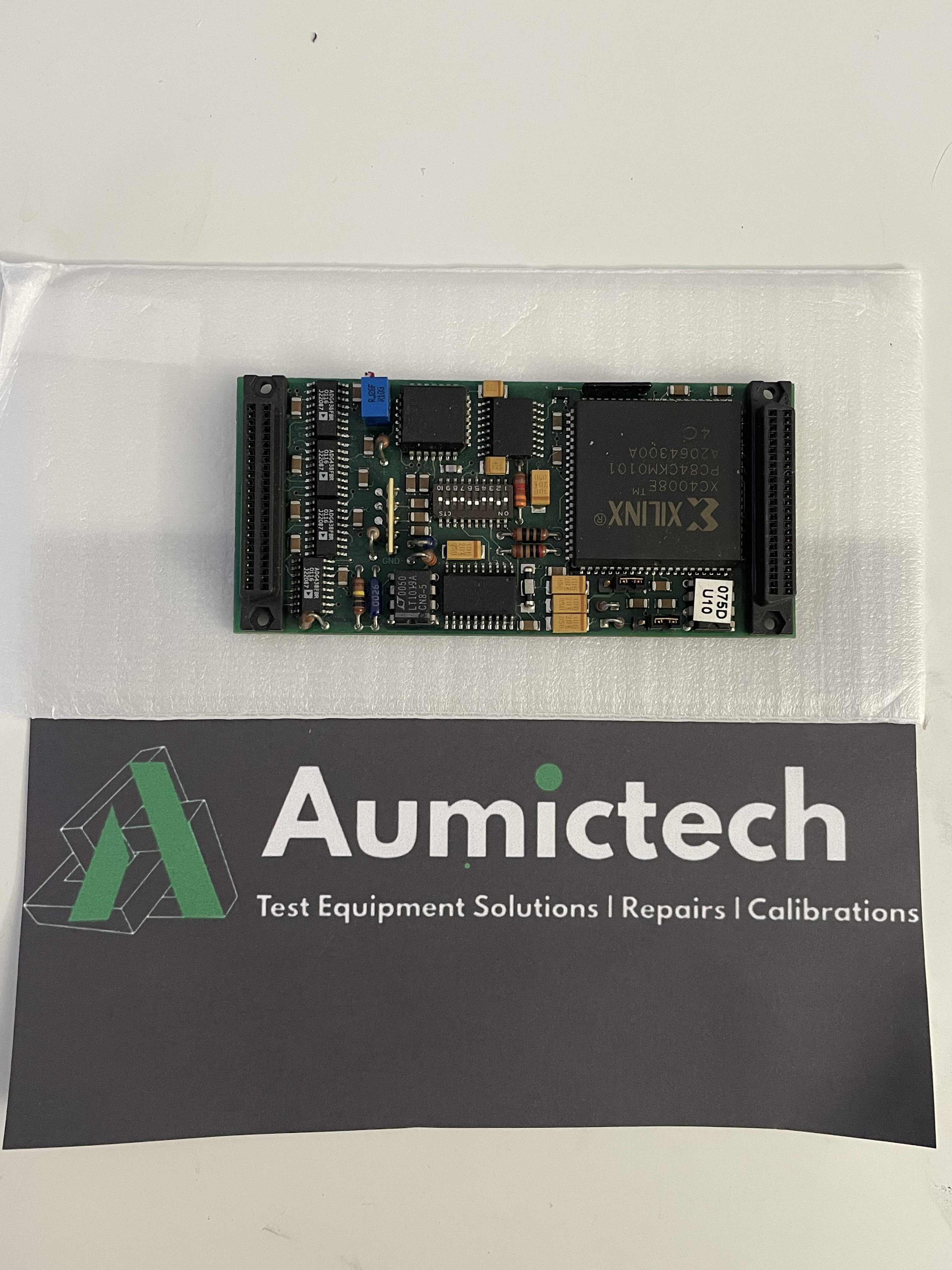
This unit
Used and new available.
The Acromag IP330 is a 16-bit A/D analog input module in the Industry Pack form factor. It accepts 32 single-ended or 16 differential analog voltage inputs, converts them at up to 125KHz throughput, and installs into any ANSI/VITA 4-1995 compliant IP carrier. It shows up in ATE racks, VME-based data acquisition systems, fusion research equipment, and defense instrumentation builds where high-resolution multichannel analog input is the requirement.
Key Specs
Form Factor: Industry Pack (IP), ANSI/VITA 4-1995
Input Channels: 32 single-ended or 16 differential
Resolution: 16-bit A/D
Throughput: 125KHz
Conversion Time: 8 microseconds
Input Ranges: ±5V, ±10V, 0-5V, 0-10V (selectable)
Programmable Gain: x1, x2, x4, x8
System Accuracy: 2 LSB (0.0030%) typical (SW calib., gain=1, 25°C)
Scan Modes: Burst, Uniform, Single-cycle, Continuous
Trigger: Software (internal) or external hardware trigger
Mailbox Memory: 32 storage buffer registers
New/Missed Data Flags: Yes, per channel in mailbox register
Operating Temp: 0°C to 70°C (standard), -40°C to 85°C (E models)
Storage Temp: -55°C to 100°C
Humidity: 5 to 95% non-condensing
What carrier card does the IP330 need?
Any ANSI/VITA 4-1995 compliant Industry Pack carrier. Acromag makes IP carriers for VME, PCI, CompactPCI, and standalone configurations. The IP330 is bus-agnostic since the carrier handles the host interface. Send us your host platform details and we will confirm the right carrier pairing.
Single-ended vs differential, which should I use?
Differential inputs reject common-mode noise on the signal lines, which matters when your sensor wiring runs near power cables, motors, or other noise sources. Single-ended gives you twice the channel count but no common-mode rejection. For industrial environments with long cable runs, differential is the safer choice.