
FiberPro PS-155-A Polarization Scrambler
- Model
- FiberPro PS-155-A
- Calibration
- NIST-traceable
- Price
- $1,759
- Status
- In stock
- RFQ ref
- PS-155-A
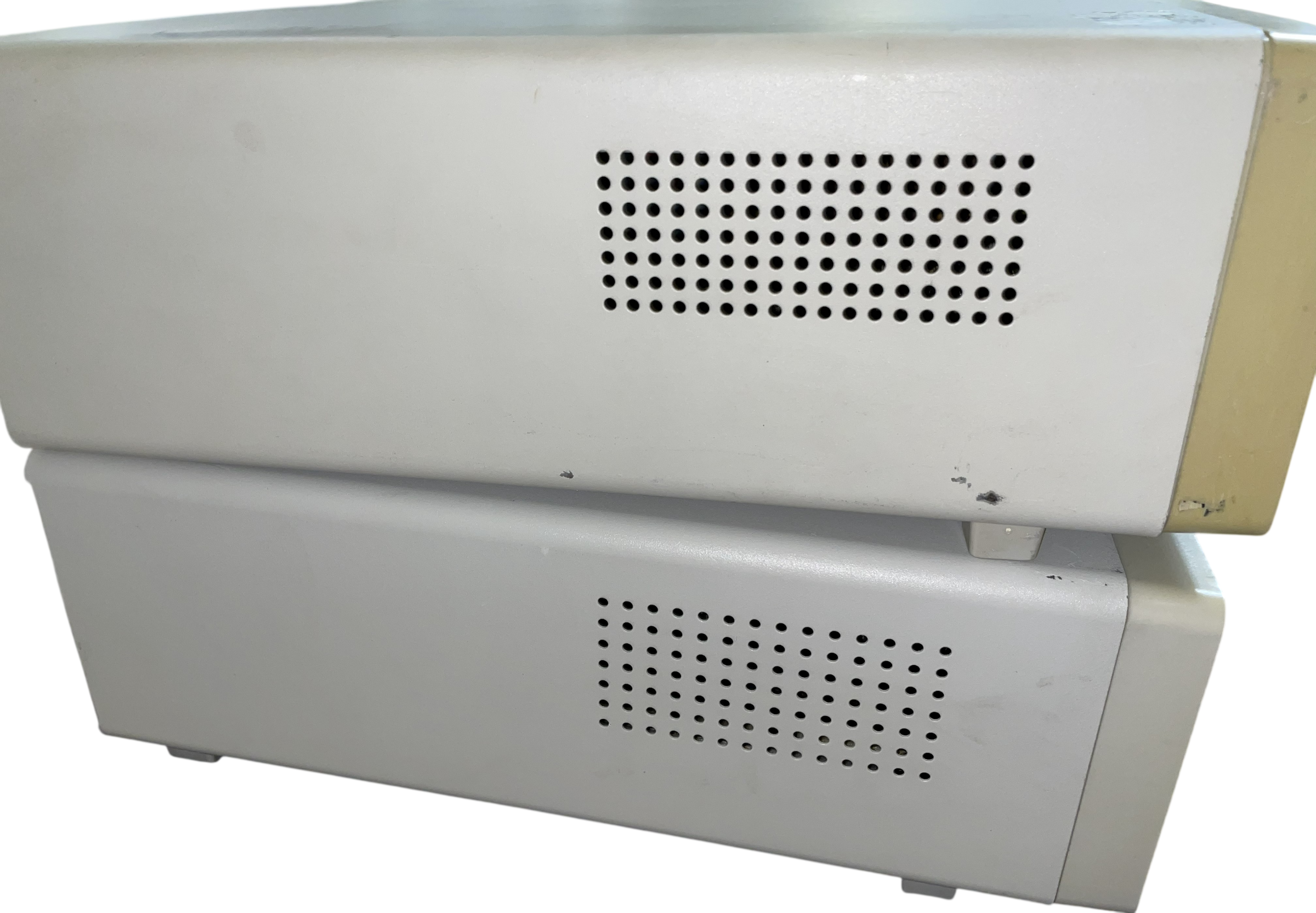
This unit
Good Condition. More than 3 units available.
Verification before listing:
- Calibrated unit.
The FiberPro PS-155-A is an all-fiber polarization scrambler built for single-mode telecom and optical component testing at 1550nm. It uses a double-stage birefringence modulator driven by internal electronics to continuously randomize the polarization state of light passing through it, independent of whatever polarization state is coming in. Plug it in, connect your fiber, and it runs. No alignment, no manual adjustment between measurements.
Key Specs
Center Wavelength: 1550nm
Operating Wavelength Range: 40nm (1530 to 1570nm)
Insertion Loss: Less than 1.5dB (with connectors)
Degree of Polarization (DOP): Less than 5%
PDL: 0.05dB typical
Average PMD: Less than 0.3ps
Back Reflection: Less than -65dB (without connector), less than -60dB (FC/APC)
Input/Output Connectors: FC/PC (or FC/APC depending on variant)
Power: 115V/230V, 50/60Hz
Remote Control: Yes, rear panel remote port
Operation: Plug-and-play, no user adjustment required
Two use cases drive most of the PS-155-A deployments in active test labs. The first is removing polarization dependent loss from measurement results. Any test instrument with a polarization-sensitive detector introduces PDL-induced measurement error when the input state of polarization varies. Running the PS-155-A in line before the DUT averages out that error over a full scramble cycle and gives you a PDL-free insertion loss reading. The second is stress testing telecom systems and components under real-world polarization variation. Systems in deployed fiber plants see continuously changing polarization states from temperature, vibration, and fiber movement. The PS-155-A replicates that environment in the lab at a controlled rate.
The double-stage modulator design is what keeps DOP below 5% across the operating band without requiring the input polarization to be in any particular state. Single-stage scramblers have blind spots where certain input states produce incomplete scrambling. The two-stage architecture eliminates those blind spots.
Back reflection below -65dB without a connector makes it clean to use in coherent and low-noise optical setups where return loss into the source matters. FC/APC variant goes below -60dB with the connector in place, which covers most DWDM and amplifier test environments.
This unit was tested at our Downingtown, PA facility before listing. Insertion loss and output DOP were verified before listing.
What measurements actually need a polarization scrambler?
PDL measurement, PMD measurement, insertion loss on polarization-sensitive components like isolators and circulators, EDFA gain characterization, and any receiver sensitivity test where the detector has polarization dependence. If your measurement result changes when you rotate a fiber connector, you need a scrambler in the setup.
FC/PC vs FC/APC, which variant is this?
Contact us to confirm the connector type on the specific unit in stock. Both variants exist in the PS-155-A product line. FC/APC gives better back reflection performance and is the right choice for coherent and amplifier test setups. FC/PC is fine for standard loss and PDL measurement work.
Can it be used outside the 1530 to 1570nm window?
The PS-155-A is optimized for the C-band with a 40nm operating range centered at 1550nm. Performance outside that window degrades. For L-band or O-band polarization scrambling you need a different model. Contact us if your application requires a different center wavelength and we will check what is available.